
Description
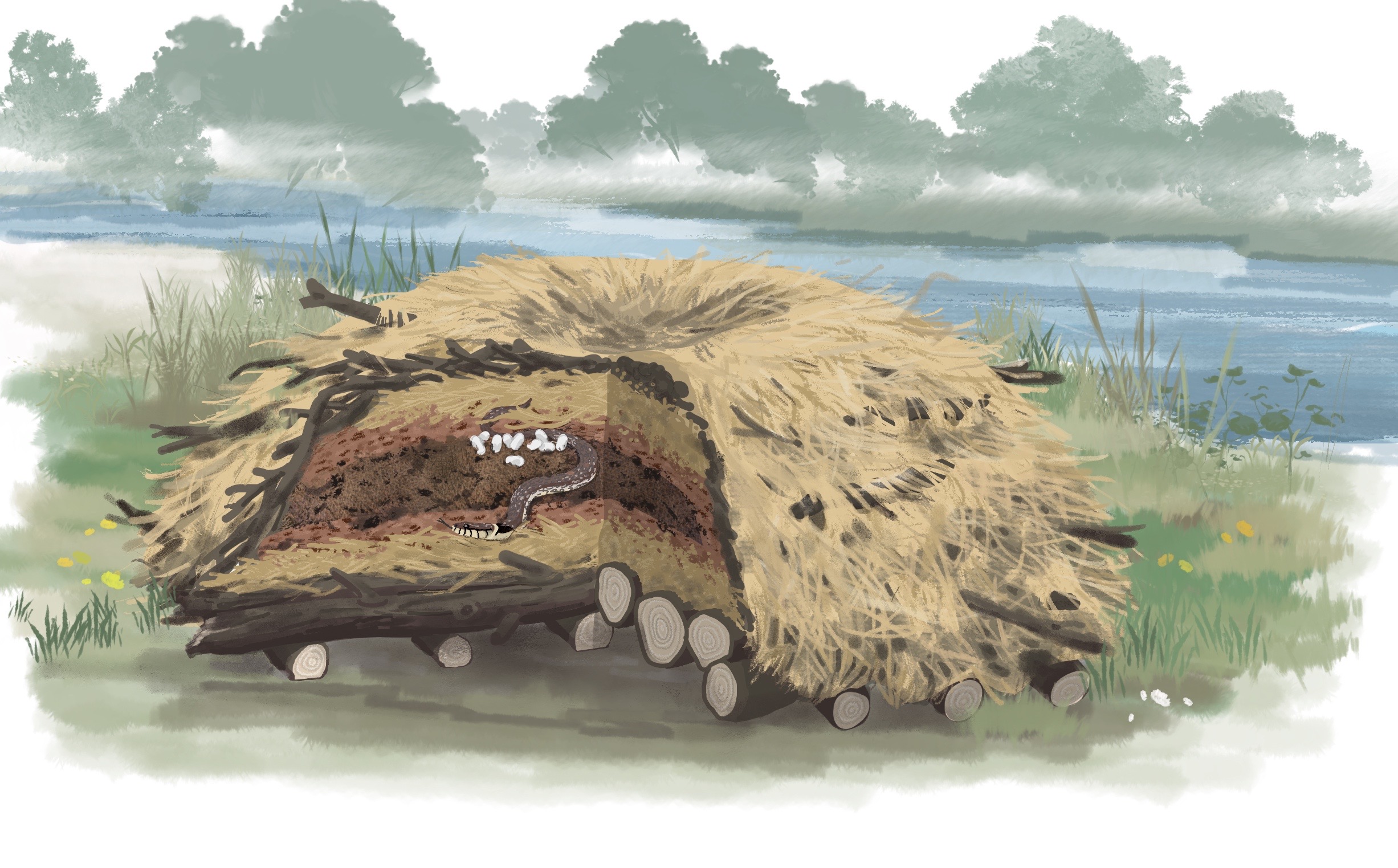
The spotted barred grass snake is a good swimmer that prefers to eat amphibians. In mid-June, the females lay up to 40 eggs in places with high temperatures and humidity and leave them there. The eggs are usually deposited at a depth of 20 to 60 cm in the pile. In August, the baby snakes hatch from their eggs.
It is important that the breeding pile maintains a temperature between 25 and 30°C. The breeding pile must be loose enough so that the female can move through it easily and so that oxygen can enter the pile. Especially important is access to the water. The pile must also remain wet, a small depression at the top ensures that rainwater flows into the center.
INSTALLATION
Previously, these were mainly manure heaps near farms, nowadays they use compost heaps and special breeding heaps.
- Maximum 4 meters from open water.
- There must be vegetation in the immediate vicinity for shelter and supply of material.
- Quiet terrain without traffic with little public.
- The heap must lie at least half in the sun. As a cold-blooded reptile, the barred grass snake likes to bask.
- The best time to create a breeding heap is between mid-March and end of April.
MAINTENANCE
Checking if there are young can be done by:
1. Carefully digging up the breeding heap at the end of March in search of eggshells.
2. Placing a tarp against the sunny side of the heap at the end of September. The young crawl underneath and can be counted.
After a year or two, the breeding heap deteriorates and needs to be re-established. Successful breeding heaps are revisited by barred grass snake. The location remains largely unchanged in that case.
Work on breeding heaps should be carried out between mid-April and the end of May or in October. This way, clutches and hibernating animals are not damaged or disturbed.