



Description
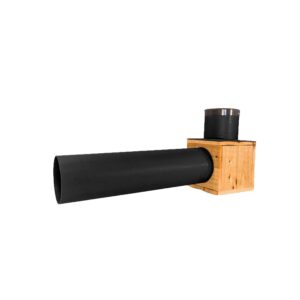
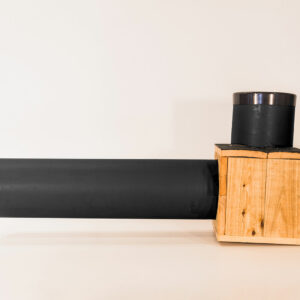
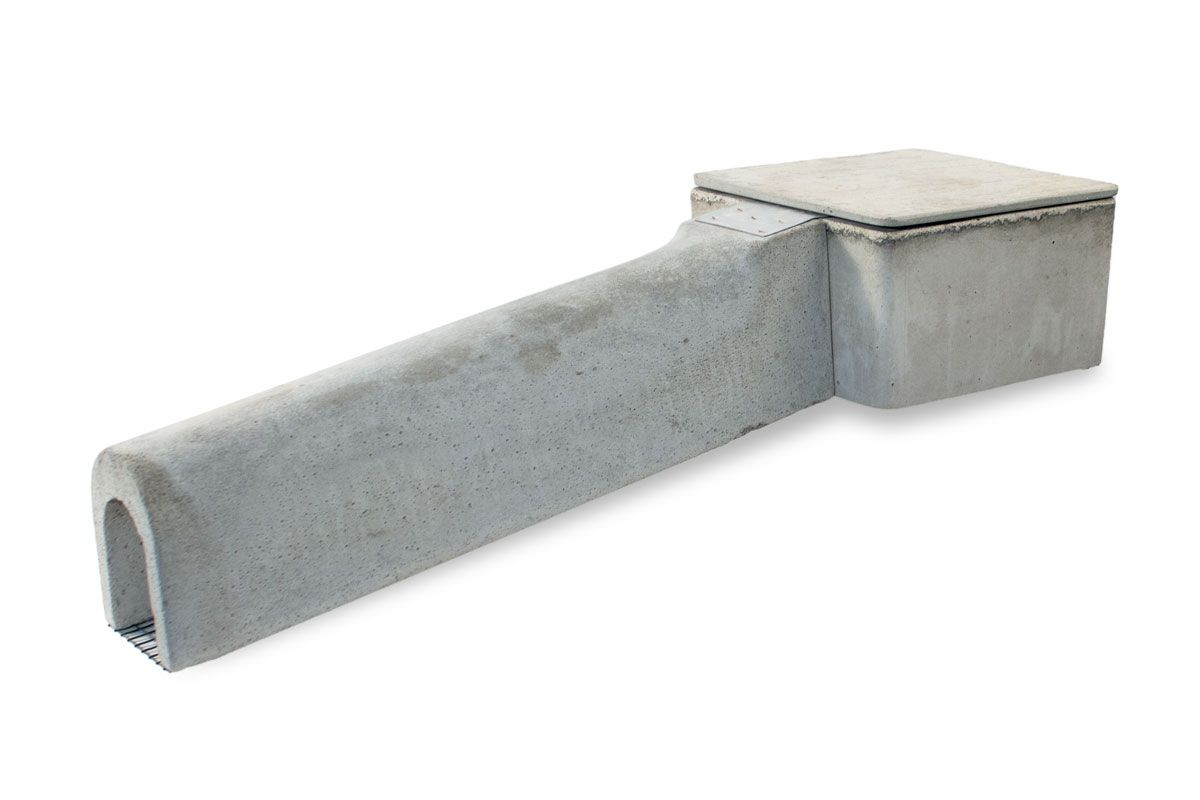
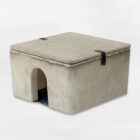
Breeding tubes are recommended where kingfishers or sand martins cannot dig the tubes themselves. This is the case, for example, with stony steep walls, bank walls, extremely root-penetrated steep slopes or a too loose bank. An additional advantage of an artificial nest is that it cannot collapse, which happens with natural nests, resulting in the loss of the entire brood.
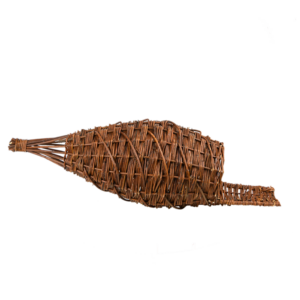
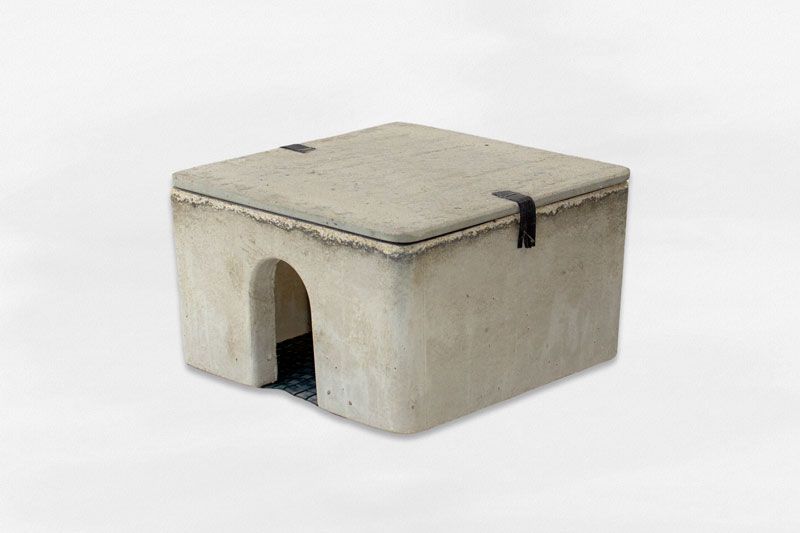
The breathable and temperature-regulating concrete prevents the formation of condensation water in the breeding space. The bottom of the base consists of wickerwork that prevents rodents from entering. The breeding space is closed at the top with a lid.
BREEDING BEHAVIOR KINGFISHER
The kingfisher has the habit of carrying out the first and second brood in different nests, so it is advisable to integrate two breeding tubes in the same steep wall. The distance, however, must be at least 70 cm between the two tubes.
INSTALLATION
The wind direction plays no role, the birds are situated in a nesting chamber deep in the bank. Sunlight also has no influence, the nest remains cool. Avoid banks where strong winds and waves crash. Not too close to recreational areas, fishing spots, bank erosion or mooring places for boats.
Ensure that the entrance hole is at least 50 cm above the water. The end of the nest should be 10 cm back in the bank. Above the nesting chamber, there should be at least 25 cm of soil.
MAINTENANCE
The best time for maintenance is January/February.